


Pennsylvania is suing Character.AI after a chatbot allegedly posed as a licensed doctor, raising major concerns about AI-driven medical misinformation. The state seeks to block unlawful medical impersonation as debates grow over whether AI companies should be held liable for harmful “advice,” even with disclaimers.

Supreme Court strikes a blow regarding voter rights

Louisiana workers’ compensation covers most medical bills and part of your lost wages if you’re hurt on the job—no matter who was at fault. After a workplace injury, report it right away, seek medical care, and start your claim as soon as possible. If your benefits are denied, delayed, your employer retaliates, or you think someone else caused your accident, it’s time to consult a lawyer. Olivier Law Firm LLC in Mandeville serves all of Louisiana, offering virtual consultations for workers statewide. Workplace Injuries & Workers’ Compensation in Louisiana: What You Need to Know No one expects to get hurt at work, but it happens every day—from slips in the break room to serious accidents on construction sites. When it does, Louisiana’s workers’ comp system is supposed to help—but the process can be confusing, and mistakes are common. Here’s how to protect yourself and what to do if things go wrong. What Does Louisiana Workers’ Comp Cover? Medical expenses for your work-related injury or illness (doctor visits, hospital stays, prescriptions, therapy) Partial wage replacement (usually two-thirds of your average weekly wage) Disability benefits if you can’t work for a while—or permanently Mileage reimbursement for medical appointments Vocational rehabilitation if you need help finding a new job It doesn’t matter if you, your boss, or a co-worker caused the accident—if you were working when it happened, you’re usually covered. What To Do Immediately After a Workplace Injury Report the Injury ASAP Tell your supervisor or employer right away. Don’t wait—delays can hurt your claim. Seek Medical Attention Go to a doctor as soon as possible. Tell them it was a work injury so your visit is documented. Document Everything Write down how the injury happened, who witnessed it, and any conversations with your employer or insurance. Keep copies of all medical records and forms. Start Your Claim Your employer should file a report with their workers’ comp insurer. Follow up to make sure it’s done. You may also need to fill out a claim form yourself. Common Roadblocks (and When to Get a Lawyer) Your claim is denied or benefits are delayed. Insurers sometimes say the injury isn’t “work-related,” or drag their feet on payment. You’re sent to the company’s doctor, but disagree with their assessment. You have rights—get a second opinion if needed. You face retaliation at work (demotion, threats, or firing) for filing a claim. This is illegal, and you have legal protection. A third party (not your employer) caused your injury. You might be able to file a separate personal injury claim for extra compensation. Your weekly wage loss payments seem too low. Calculation errors are common; a lawyer can help correct them. If any of these happen, or you’re confused about your rights, don’t wait— Olivier Law Firm LLC can review your case and step in quickly if needed. Learn more about workplace accidents and your rights here: Workplace Injuries or see o u r broader Personal Injury services. Book a Virtual Meeting—Statewide Help, Local Heart Whether you’re in Mandeville, Baton Rouge, Shreveport, or a small town, you can book a virtual consultation with Olivier Law Firm LLC and get answers fast—no need to travel or miss more work. Injured on the job? Schedule your virtual meeting with Olivier Law Firm LLC today. Get the benefits you deserve, and the support you need, wherever you are in Louisiana.

Treat AI Like Your Lawyer: the free cost can be EXPENSIVE

Code of Ethics, Call for Ethics, Call for Guardrails, Jason Olivier's Code of AI Ethics

Sometime, non-legal posts can be curious to read
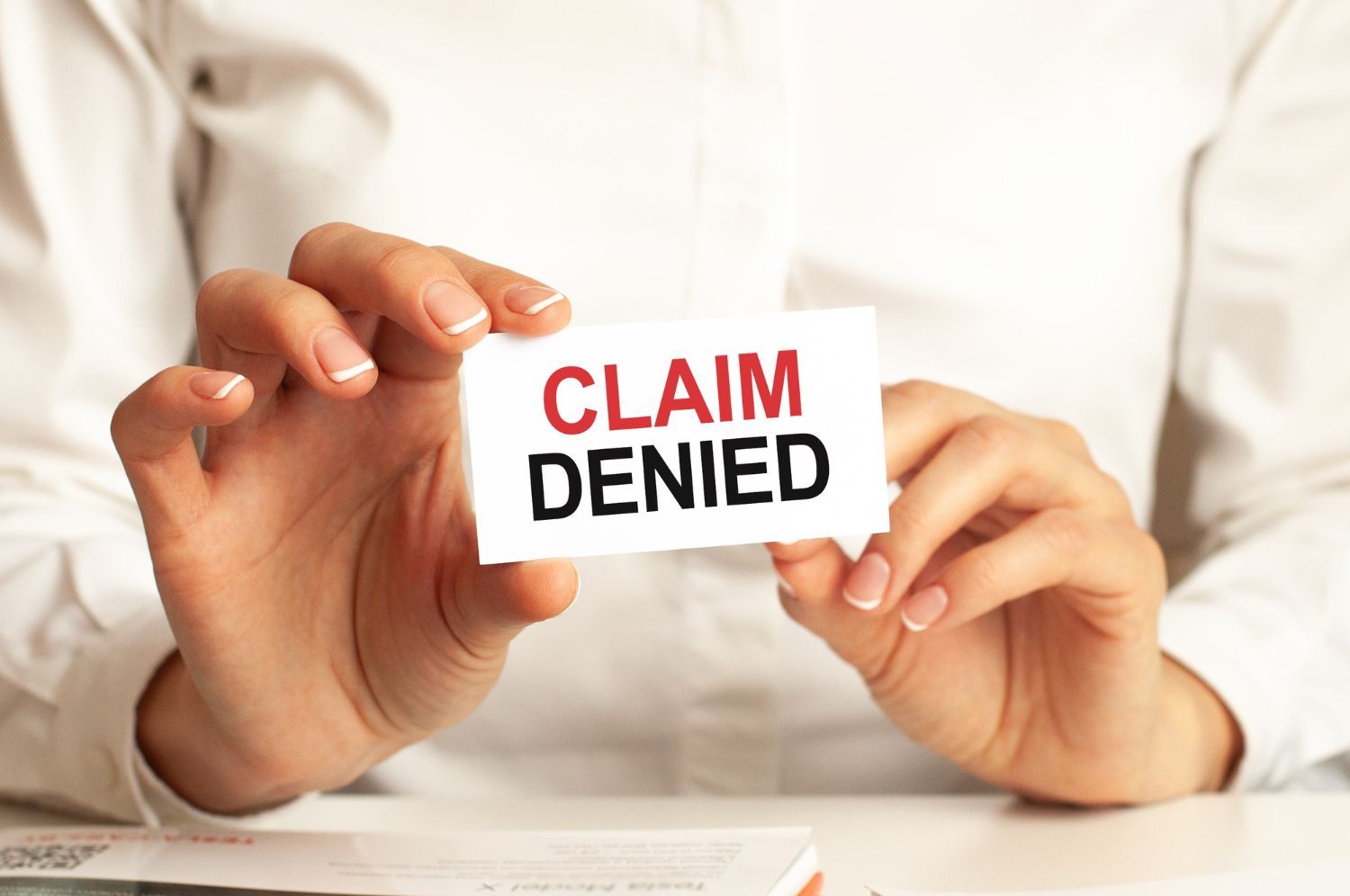
If your insurance claim is denied in Louisiana, don’t panic—your next steps are to request the denial in writing, review your policy carefully, gather evidence, and pay attention to appeal deadlines. Most denials can be challenged if you’re prepared. Olivier Law Firm LLC in Mandeville helps clients throughout St. Tammany Parish and the Northshore fight unfair insurance decisions and get the coverage they paid for. What to Do After an Insurance Claim Denial in Louisiana Getting an insurance denial—whether for storm damage, a car accident, or a health issue—can feel like hitting a wall, especially when you’ve paid your premiums faithfully. But a denial is not the end of the road. Many claims are paid out after appeal or negotiation—if you take the right steps and act quickly. Here’s what to do next: 1) Get the Denial in Writing Ask your insurer for a written explanation of why your claim was denied. They must provide this by law, and it’s your starting point for any appeal. Verbal reasons or vague emails aren’t enough—insist on an official denial letter that includes the specific policy provision they’re citing. 2) Review Your Policy Carefully Read through your policy and compare it to the denial letter. Check: What coverage you have (and any exclusions) Deadlines for appealing or submitting more information (“proof of loss” deadlines) Whether the insurer followed their own process If the language is confusing, that’s normal—Louisiana policies are written in complex legal terms. Don’t hesitate to ask a professional (like Olivier Law Firm LLC) to help you make sense of it. 3) Gather Your Evidence The more documentation you have, the stronger your appeal. Helpful evidence includes: Photos or videos of the damage (property, vehicle, injuries, etc.) Repair estimates or invoices from licensed contractors or auto shops Medical records and doctor’s notes for health or injury claims Receipts for expenses related to your claim (temporary repairs, hotels, etc.) Communications with your insurer—emails, texts, notes from phone calls Organize everything by date and keep copies of all paperwork. 4) Watch All Deadlines Louisiana law—and most policies—set strict deadlines for appealing a denial, submitting new information, or filing suit. These can be as short as 30 or 60 days. Mark your calendar and don’t wait to act. Common Reasons Insurers Deny Claims (and How to Respond) “Excluded event” or “pre-existing damage”: Double-check the policy’s exact wording and look for evidence the insurer is stretching the definition. Missed paperwork or deadlines: Sometimes this is fixable—submit missing info or ask for an extension in writing. “Insufficient proof” or “not enough documentation”: Provide photos, estimates, or medical records to back up your claim. Policy lapse or nonpayment: Check the insurer’s proof—sometimes billing errors are to blame. Even if the reason sounds final, insurers sometimes use blanket statements to discourage appeals. Many clients in St. Tammany Parish and the Northshore have turned denials around by pushing back. When to Get a Lawyer Involved If you’re getting the runaround, if deadlines are looming, or if the financial impact is serious, it’s wise to get legal help. Olivier Law Firm LLC in Mandeville has deep experience holding insurers accountable across the Northshore and all of Louisiana. We’ll review your denial, help gather evidence, and fight for the payout you deserve. Learn more about your rights on our Insurance Disputes page. Don’t let an insurance denial stand in your way. Request a claim review from Olivier Law Firm LLC—serving Mandeville, St. Tammany Parish, and all Northshore communities. We’ll help you fight for the coverage you’re owed.

Why a Will Matters for You and Your Family

For most Louisiana small businesses, an LLC is the best fit because it’s flexible, easy to manage, and protects your personal assets. The top three things to consider when choosing between an LLC and a corporation are liability protection, taxes, and ownership structure . The next step? Understand the differences, check what matters most for your business, and make sure your documents are done right. Olivier Law Firm LLC in Mandeville serves the Northshore—including Covington, Abita Springs, and all of St. Tammany Parish—and can help you get started with confidence. LLC vs. Corporation: What’s the Real Difference? Starting a business in Louisiana? You’ve probably heard you should form an LLC or a corporation—but what does that really mean for you? Here’s the plain-English breakdown: LLC (Limited Liability Company): Great for most small businesses and startups Simple, flexible, fewer formal rules Protects your personal assets from business debts and lawsuits Profits/losses can “pass through” to your personal taxes (no double-taxation) Corporation (C or S Corp): More rules, paperwork, and meetings (especially for C Corporations) Best if you plan to attract investors, issue stock, or want a traditional corporate structure Owners (shareholders) aren’t personally liable for company debts Possible double-taxation (C Corp: both company and owners taxed), unless you qualify and elect S Corporation status Top 3 Decision Factors Liability Protection: Both LLCs and corporations protect your personal assets—but only if you keep your business and personal lives separate, and file the right paperwork. Taxes: LLCs are usually simpler: profits/losses go straight to your personal tax return. Corporations may have more tax options (especially for larger businesses), but can involve double-taxation unless you file as an S Corp. Ownership & Management: LLCs are more flexible (great for solo owners, family businesses, or partnerships). Corporations must have directors, officers, and regular meetings—better if you need outside investors or plan to grow big. Simple Decision Checklist Ask yourself: Are you a solo owner or family-run? LLC is often easier. Want simple taxes, less paperwork, and flexibility? LLC wins. Planning to raise money from outside investors, or issue stock? Corporation may be the way to go. Need a classic business image, or aiming to sell the business in the future? Corporation can help, but many buyers are fine with LLCs. Still unsure? Visit our Business Law page for details, or Business Formation for startup guidance. Common Pitfalls of DIY Business Formation Many entrepreneurs try to save money by using online forms or filing themselves. Here’s where things go wrong most often: Missing required documents (like an Operating Agreement for an LLC, or Bylaws for a corporation) Picking the wrong structure for taxes (costly to fix later!) Not registering with the Louisiana Secretary of State the right way Mixing personal and business money, which can destroy your liability protection Failing to file annual reports (leading to dissolution or extra fees) Not understanding local permits or licensing rules Takeaway: A little upfront guidance can prevent big headaches and save you money in the long run. What Documents Matter Most? LLC: Operating Agreement (this spells out how your business runs—even if you’re solo, it’s vital for protecting your “limited liability” status) Corporation: Bylaws (governs your meetings, officers, and decision-making) Both: Articles of Organization/Incorporation, EIN from the IRS, and proper licenses Get it Right—The First Time Olivier Law Firm LLC, based in Mandeville and serving all of the Northshore (Covington, Abita Springs, St. Tammany Parish), has helped hundreds of Louisiana small businesses set up the right way. We can guide you through the choices, handle the paperwork, and give you confidence that your company is protected from day one. We also offer virtual consultations, so you can get advice without leaving home. Ready to launch your business or fix a filing mistake? Schedule a consultation with Olivier Law Firm LLC—virtual or in-person. Get local, experienced guidance for your Louisiana LLC or corporation.
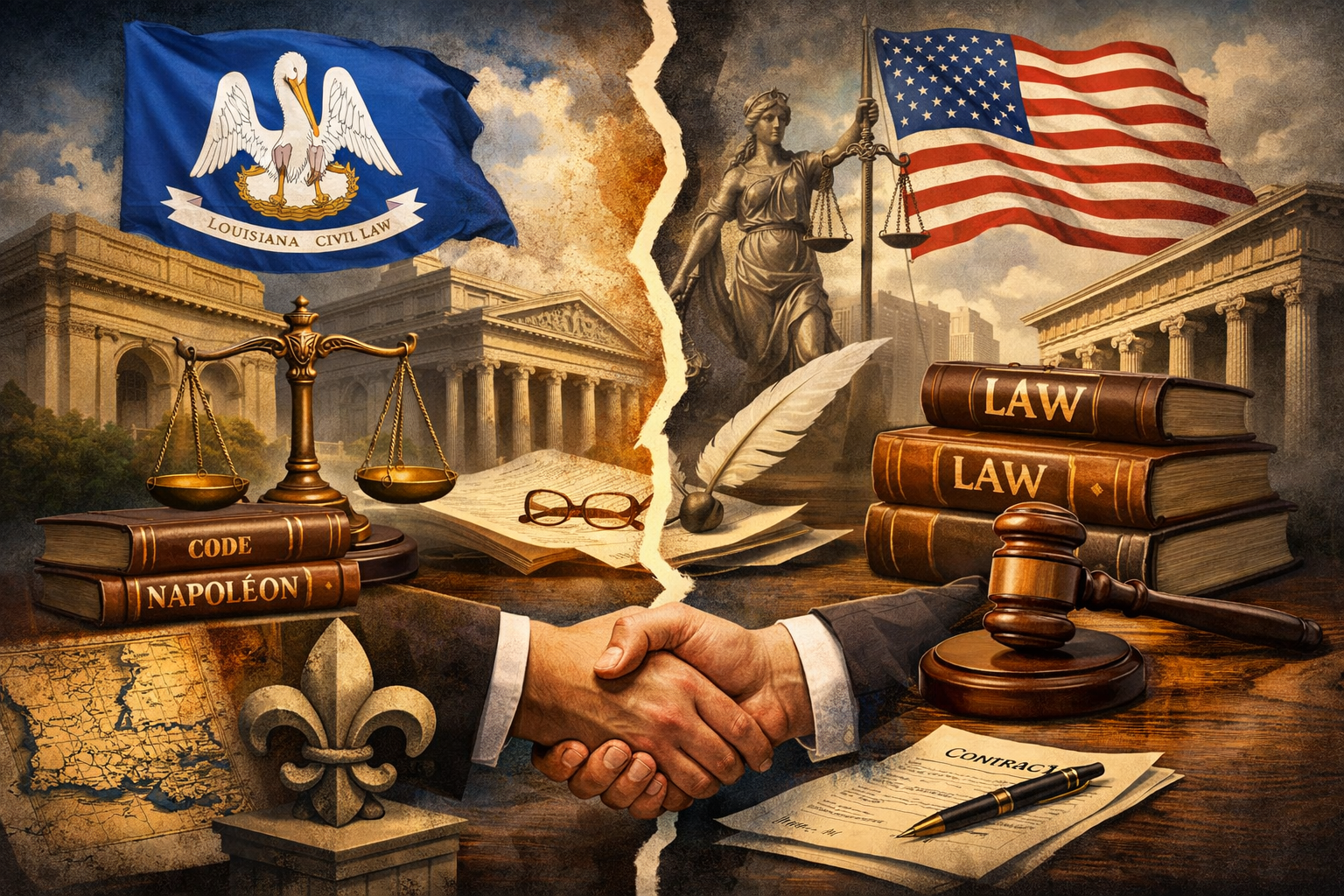
Louisiana’s civil law system is unique—it’s based on French and Spanish codes, not English “common law” like every other state. This difference affects how contracts are written, enforced, and disputed, which matters to anyone doing business or signing agreements here. If you live or work in Louisiana—including underserved regions north of I-10/I-12—knowing these differences can save you headaches and money. Bottom line: contracts and disputes here follow their own rules, so local legal advice is a must. Why Is Louisiana’s Law System Different? If you’ve ever wondered why legal paperwork looks different in Louisiana, you’re not imagining things. Louisiana is the only U.S. state that uses a civil law system, built on centuries-old French and Spanish codes. Every other state follows the “common law” tradition from England. This means that while most of the U.S. relies on past court decisions to shape the law, Louisiana looks first to written statutes and codes. Who does this affect? Everyone—from business owners in Mandeville and Covington, to families in rural parishes above I-10/I-12. Whether you’re signing a lease, making a business deal, or arguing over a contract, these unique rules shape your rights and responsibilities. Civil Law vs. Common Law: What’s the Real Difference? Here’s the simplest way to explain it: Civil Law (Louisiana): Laws are mainly written out in codes (like the Civil Code), and judges start by looking at the text, not past cases. Common Law (everywhere else): Laws are based on previous court decisions (“precedent”) and statutes. Judges often use past cases to fill in the blanks. In practice, this means that a Louisiana judge will reach for the code book before digging into old cases, and the actual text of the law tends to matter more. Why Does This Matter for Contracts and Disputes? 1. Contracts Mean What the Code Says—Not Just What’s “Customary” In other states, if a contract is unclear, courts may look at what’s been decided before or what’s “usual” in business. In Louisiana, the code spells out what’s allowed, what’s forbidden, and even what happens if something is left out. That means: Some contract terms that are enforceable elsewhere aren’t valid here—and vice versa. Things like “cause” (the reason for a contract) matter more than “consideration” (the payment or exchange) in Louisiana. Boilerplate contracts from out-of-state might not protect you or could even backfire. 2. Everyday Disputes Have Their Own Rules Got a disagreement over a sale, a lease, or a handshake agreement? Louisiana’s Civil Code sets out the process—sometimes with quirks, like shorter deadlines to sue (“prescription” periods) or specific notice requirements. You can lose your right to collect or enforce something just by missing a step the code requires. 3. Wills, Inheritance, and Property Are Different Too From “forced heirship” rules for families to how property is split in divorce, the code touches nearly every aspect of daily life. That’s why even common forms (like online contracts or will kits) may not hold up here. Who Should Care Most? Small business owners and startups signing contracts or hiring employees Anyone buying/selling property or vehicles People with out-of-state business partners (your standard contracts might not work here!) Families handling estate issues or inheritance Anyone in a contract dispute If you’re north of I-10/I-12, where legal help can be hard to find, it’s even more important to have an attorney who actually knows Louisiana’s civil law system. Why Work With a Local Louisiana Law Firm? Olivier Law Firm LLC, based in Mandeville and serving clients statewide (especially in underserved areas above I-10/I-12), is built around this unique legal system. With deep roots in Louisiana law and decades of experience, we make sure your contracts, business deals, and disputes follow the right rules and protect your interests. Want to know more about contracts? See our page on Contract Law Nee d help with business legal issues? Visit Business Law Bottom line: Don’t risk your business or personal deals on “cookie cutter” advice from other states. If it’s important enough to sign, it’s important to get the Louisiana details right. Have a contract, business question, or legal concern? Schedule a consultation with Olivier Law Firm LLC today—we’re here to make Louisiana law make sense for you.